
Women, we were made for more
In modern culture, conversations about equality often blur the meaning of womanhood itself. This essay explores why equality does not require sameness and why the dignity of womanhood should not be measured against men.
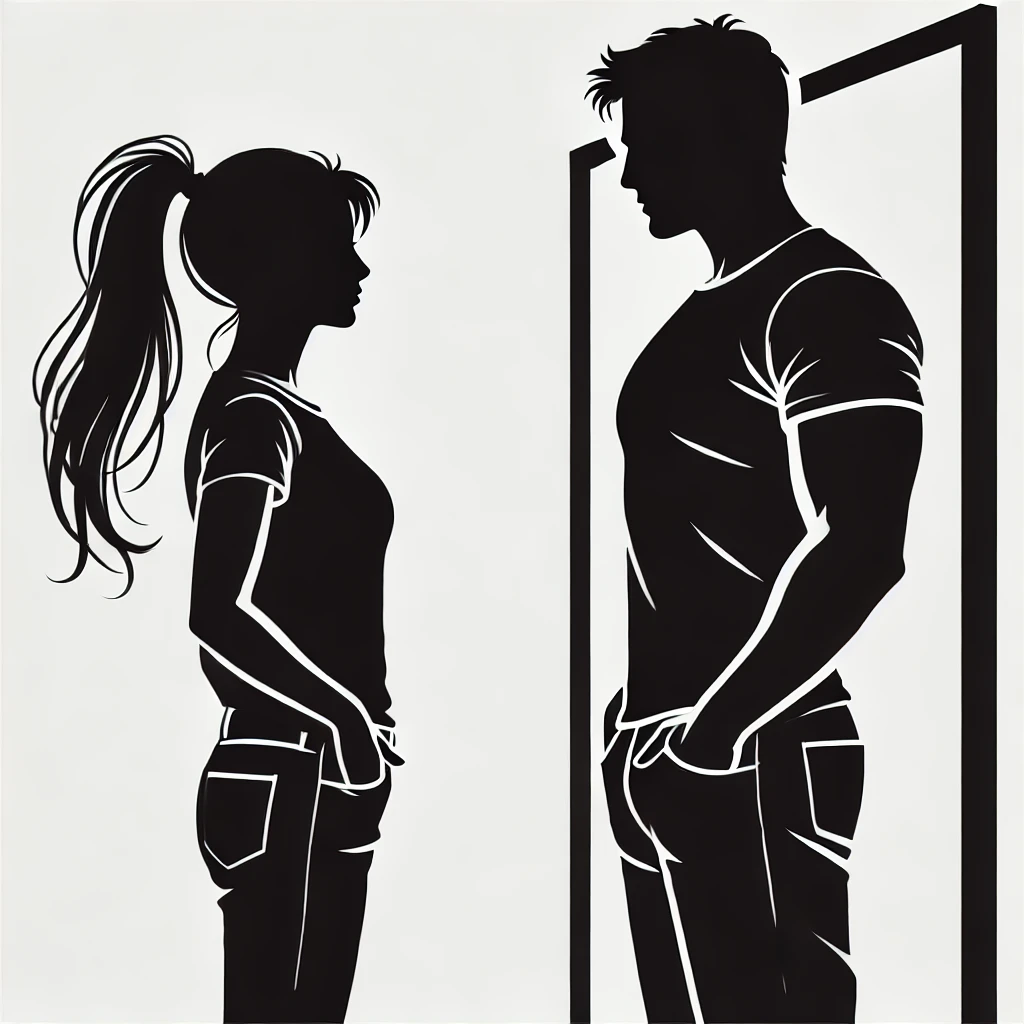
THE QUIET EROSION OF WOMANHOOD
The quiet dignity once attached to building a home, nurturing life, raising a family, and shaping culture from the inside out is slowly eroding. It is becoming harder to speak about these things as meaningful or honorable without apology. That loss presses on me because I love being a woman.
I carry a burden for womanhood. I see something good, something deeply human, gradually losing its place in how we understand ourselves.
THE PROBLEM WITH MEASURING WOMANHOOD AGAINST MEN
And so I cannot help but ask: why do we so often measure our worth by comparison to men?
Why has our value become something that must be validated against men in order to count?
Why must we match, mirror, or surpass them in order to feel strong or capable?
When did we begin to believe that greatness requires resemblance to men?
Who or what shaped this thinking in us?
And perhaps most importantly: when did we stop believing that womanhood, in all it possesses, is beautiful in its own right?
Beauty here does not mean superficial attractiveness. It refers to the goodness and meaning embedded in the nature of womanhood itself.
I see this comparison constantly. It is subtle, often almost imperceptible. The comparison itself is not the problem; we understand what is being compared. What often goes unnoticed is what the comparison implies: that in order to have value as women, we must become something other than what we are.
Consider the kinds of headlines that regularly circulate. The following examples are drawn from common media coverage and internet search results and reflect the comparative framing often used when discussing men and women:
- Women Are Better Than Men1
- Women Say They Need to Work Harder Than Men2
- If Women Want Equality at Work, They Should Act More Like Men3
- Seven Proven Things Women Do Better Than Men4
- Is It Sexist To Say That Women Are Superior To Men?5
Different conclusions, but the same assumption: womanhood must always be measured against men.
This question also connects to the deeper cultural confusion surrounding the meaning of beauty, something explored further in Surrounded by Beauty, Losing the Beautiful.
Yet the deeper problem is not the headlines themselves.
The problem is the assumption beneath them.
EQUALITY DOES NOT MEAN SAMENESS
Many modern frameworks interpret equality to mean interchangeability, that men and women must be capable of occupying the same roles in the same ways. But equality does not require sameness. Men and women can share equal dignity while expressing that dignity through different forms. When equality is reduced to interchangeability, real distinctions are flattened, and the unique character of womanhood is obscured.
This means we can still advocate for equality in terms of opportunity and access without erasing or replacing womanhood itself.
Part of the confusion surrounding equality comes from treating two different categories as though they were the same. Equality concerns moral status, our worth as human beings. Sameness, however, concerns functional identity, whether two things perform the same role or operate in the same way. These are not the same category. Two realities can be equal in worth without being identical in function.
A mother and a father share equal dignity as parents, yet their roles are not interchangeable; each contributes something distinct that the other cannot simply replace, bringing different and complementary ways of giving life, care, and formation to a child. Similarly, the heart and the brain are equally necessary for life, but they are not interchangeable organs. Equality, therefore, does not require sameness. When equality is interpreted as interchangeability, the result is not a preservation of dignity but a distortion of how different realities contribute in their own way.
DISTINCT EXCELLENCE
What I am saying is this: female strength and value cannot be judged by male standards any more than male strength can be judged by female standards.
And this is where the confusion begins.
Men and women share the same human dignity, but they are not identical in nature or expression. When realities differ by design, they display excellence in different ways, so measuring them on the same scale creates a false standard. We do not compare the excellence of a tree and a horse on the same criteria. Excellence is always measured relative to the nature of the thing itself.
The biological differences between men and women, the relational ways men and women tend to engage the world, and our distinct reproductive roles are not accidental features of the human body; they are part of the purposeful design of human nature.
We can stop and breathe here. This distinction is not merely philosophical; it is grounded in biological reality.
If we judge women by what men are, we distort both women and men.
While we have a shared dignity, our excellence and gifts are not a competition. That means that who I am as a woman has no bearing on how I measure against a man.
This isn’t an unhealthy anti-male railing. Instead, this is to push back against anyone who tries to make me believe that being a woman is less, even if that’s not how they say it. That includes women, too.
I believe a lot of movements by women, for women, have, over time, harmed women.
In the pursuit of equality, we have sometimes diminished the very qualities that make womanhood distinctive. By that I mean these qualities distinguish us and demonstrate how we are unique within God’s created order.
WHY SOME GIRLS FEEL THE NEED TO ESCAPE WOMANHOOD
One place this quiet dissatisfaction with womanhood becomes visible is in the experiences of some adolescent girls themselves.
In Irreversible Damage, Abigail Shrier describes cases in which some females who identify as transgender have undergone, or even desire, phalloplasty. She also notes the observation of therapist Sasha Ayad, whose practice focuses largely on adolescents who identify as transgender, that many female clients express a different motivation. As Ayad explains, a common response she hears from these girls is: ‘I don’t know exactly that I want to be a guy. I just know I don’t want to be a girl.’ Shrier wrote that adolescent girls “flee womanhood like a house on fire, their minds fixed on escape, not on any particular destination.”6
I have to wonder: when did being a woman become something we need to flee?
Even casual online searches reveal the same quiet unease. Questions appear, such as ‘I hate being a girl, is that wrong?’ ‘I’m a girl, and I don’t like when people call me a girl.’ or ‘Why do I like being a girl but hate the associations that come with it?’ These are not the words of women celebrating their identity, but of girls struggling to understand it.
I believe it is this subtle belief that is silently conveyed regarding women’s equality with men. Without realizing it, we have accepted manhood as a standard for excellence in womanhood. And this assumption, though often unspoken, is reinforced by some of the loudest voices in modern conversations about women’s rights. When equality is framed as becoming like men, manhood quietly becomes the measure of excellence. Because being a woman is fundamentally different and beautiful in its own right. I don’t need to fight for my value or worth, nor judge myself by a standard outside my design, in order to have significance. As a woman, I am enough.
I have inherent value as a woman, given to me by God. He has spoken over womanhood in a way that imparts dignity, value, and honor. There may be role differences in Scripture, but they are not intended to diminish us as women; instead to demonstrate how our nature impacts this world.
The very idea that we have such an impact on the culture through nurturing the home is inherently valuable and significant. It is sad that homemaking is considered a role of lesser value. I am not speaking negatively about professional women, nor do I find anything wrong with working outside the home, but I am seeking the restoration of the beauty of the particular aspects of womanhood that have now become distasteful or shameful things to pursue.
I am not speaking about the modern ‘tradwife’ trend. The question I am raising runs deeper than lifestyle aesthetics or internet movements; it concerns the meaning and dignity of womanhood itself.
To shape the hearts and minds of the next generation. To bear and raise children to go into the world to impact their culture and circle of influence, to nurture and love a husband and be his helpmate is something of profound significance.
FREEDOM WITHOUT COMPARISON
When we stop measuring ourselves against men, something else becomes possible as well.
Freedom.
We no longer need to compete with men for identity or value. Instead, we are free to allow men to be who they were meant to be, just as we are free to be who we were meant to be.
And once we see this clearly, something freeing happens.
I can be a mom and a wife, and that is enough.
I can build a home and nurture those around me, and that is enough.
I can pursue the things that make womanhood beautiful, and that is enough.
I can simply be a woman, without comparison to a man, and that is enough.
I can work inside or outside the home, and that is enough.
I can allow men to be who they were meant to be, and that also is enough.
Because being a woman is not a lesser version of being a man.
It is something entirely its own. And is incredibly beautiful.
Recovering the meaning of womanhood does not require rejecting equality. It requires remembering that equality does not mean sameness. Women and men share equal dignity, yet they express that dignity in different ways. When we stop measuring women against men, we rediscover the beauty, purpose, and significance embedded in womanhood itself.
Notes:
- https://pmc.ncbi.nlm.nih.gov/articles/PMC4610696/
↩︎ - https://www.reliableplant.com/Read/9307/study-women-say-y-need-to-work-harder-than-men
↩︎ - https://medium.com/the-no%C3%B6sphere/in-men-overwork-is-rewarded-in-women-its-seen-as-incompetence-9328e6f239f9
↩︎ - https://www.deseret.com/2018/3/23/20794297/7-proven-things-women-do-better-than-men/
↩︎ - https://www.npr.org/sections/13.7/2015/04/16/400075715/is-it-sexist-to-say-that-women-are-superior-to-men
↩︎ - Abigail Shrier, Irreversible Damage: The Transgender Craze Seducing Our Daughters (Washington, DC: Regnery Publishing, 2020), Kindle location 7 ↩︎
Leave a Reply