
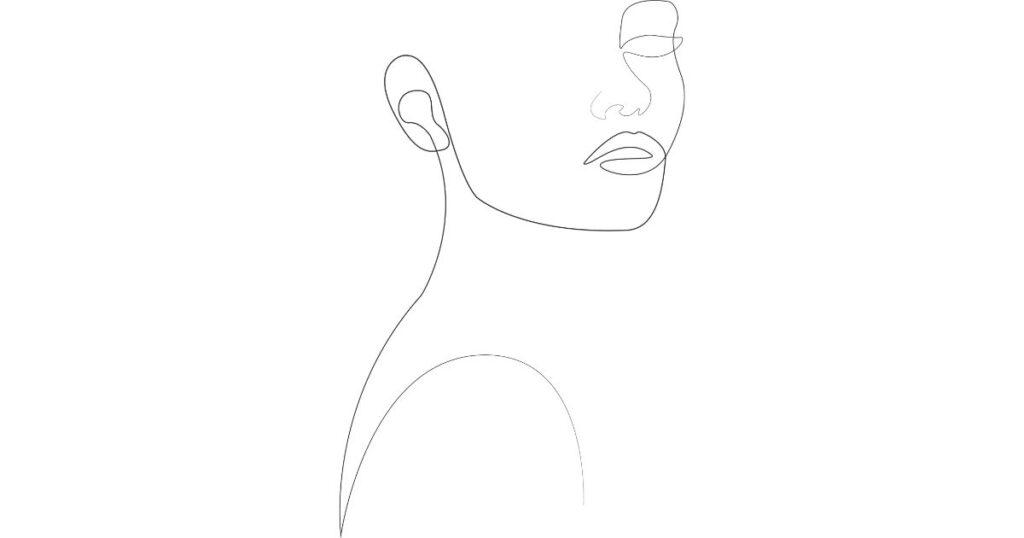
Why start with beauty? Few questions shape a woman’s interior world as persistently as the meaning of beauty itself. Beauty influences how we see ourselves, how we imagine being seen, and how we interpret value, often long before we consciously recognize its power in our lives. For many women, beauty is one of our greatest identities, shaping how we understand so much of our world. We desire to be beautiful, to have beautiful homes, and to surround ourselves with beautiful things. For many of us, beauty can feel fundamentally defining. This may not be absolutely or wholly true, but it is substantially true. Many women feel this tension not only intellectually but also emotionally, in the fatigue of comparison, the anxiety of constant measurement, and the quiet sense that beauty has become both a burden and a performance.
While cultural and generational differences shape how beauty is understood and defined over time, the core desire to make things beautiful and to be beautiful appears deeply rooted in our being. Theologically speaking, this desire is not accidental: humans are drawn to beauty because reality itself is structured by a beautiful Creator. Rightly understood, beauty is therefore not imposed from outside, but interwoven into who we are.
The Tension Within Modern Beauty
Beauty, though, is an interesting thing, as what can be culturally celebrated as beautiful and valuable may not possess any true, enduring, or substantive worth. Even apart from theological conviction, many sense that beauty has become unstable, as it is too easily manufactured, even more easily lost, and too easily and wrongly confused with self-worth. This is in part because, in our current day, beauty can be purchased or engineered and is often grounded in what is inherently fragile. We see a person who is physically beautiful, dresses well, and has a beautiful home, and we often attribute wholeness and even goodness to the person. In this way, a stylish, carefully maintained illusion can replace the real value and substance that historically underpinned beauty. The illusion exists because what we see may or may not be true, as the person behind the image can be nothing like the curated vision before us.
I am not primarily speaking of how beauty has been perceived by men, as men and women have a different relationship with beauty. Instead, I am addressing how beauty functions among women. There was a time when strength of character, wisdom, and the inner person were widely recognized by women as the very qualities that gave rise to a different type of beauty beyond one’s appearance. It was these qualities that we understood made someone truly beautiful. Yet this richer vision appears to have been fading for some time.
Even more so, where distinction and uniqueness were once valued in physical beauty, we now encounter a narrower, more standardized vision of what is considered beautiful. Social media and cultural pressures are a large part of the blame, as they increasingly redefine beauty standards towards an increasingly limited vision; as a result, differences in beauty are disappearing. Not only are interior values distorted, but even true physical beauty and genuine physical diversity are becoming undervalued and diminishing, replaced by a kind of aesthetic uniformity and a somewhat hive-mind mentality.
This is a problem.
Women as Cultural Anchors
As women, we have an important role in shaping culture. We cultivate homes, build families, stabilize emotional and relational environments, and frame many of the narratives that structure daily life. This has historically been one of the greatest and most distinctive contributions we have as women. So for us, when we believe the lie, when beauty becomes detached from truth and substance, when illusion replaces reality to the point where we can no longer even see the deception, what follows is a unique form of distortion.
When we absorb these redefinitions without question or reflection, our perception of truth becomes unstable. And when we participate in the distortion, we deepen and alter how we understand ourselves, one another, and the very meaning of beauty itself.
Recovering Feminine Beauty
Ontologically, in the very nature of what something is, beauty, and therefore the meaning of beauty, is not superficial but rooted in being, form, and order. Augustine reasoned beauty beyond appearances, arguing that true beauty reflects unity (unitas), proportion (proportio), and order (ordo). For Augustine, we are most beautiful when the soul is rightly ordered toward God. Gregory of Nyssa similarly understood beauty as participation in divine goodness, where the soul becomes beautiful through transformation toward the Good.
Theologically speaking, Scripture doesn’t reject physical beauty but instead reorders it. Beauty finds its deepest grounding first in spiritual beauty brought upon by holiness, charity, and wisdom, then moral beauty expressed through virtue and integrity, followed by relational beauty seen in gentleness and faithfulness, and finally physical beauty, real yet secondary to the weightier dimensions of the person. None of this diminishes the goodness of physical beauty; rather, it restores it to its proper place, as an expression, not a foundation of one’s wholeness. Feminine beauty, in this light, is neither manufactured nor inherently fragile but revealed through rightly ordered being. Where the culture often idealizes surface beauty, theology dignifies substance and restores depth and permanence to beauty, revealing what it truly means to be beautiful.
“We are surrounded by images of beauty while slowly losing sight of the beautiful.“
This is something we increasingly struggle to remember. Women have always wrestled with external standards and material expressions of beauty. This is nothing new to us. Yet there has historically and fundamentally remained an intuitive awareness that appearance does not exhaust identity… that the vision we see is not the person…until now.
In exchanging enduring value for cultural norms, every day we are losing a little more of what makes us actually beautiful. We are losing not only distinction, but depth, not only diversity, but meaning. What is quietly eroding is a fuller understanding of the meaning of beauty, personhood, and lasting worth, and with it, something essential to our vision of ourselves as women.
Why Start With Beauty?
I started with beauty because I believe that, as women, we have been asked to exchange our worth for an illusion. As so much of our identity is tied to what makes someone beautiful, this is at the heart of much inner pain and loss of womanhood. As a result, we are surrounded by images of beauty while slowly losing sight of the beautiful.
This confusion about beauty is closely related to a deeper cultural habit of measuring womanhood against men, rather than understanding the distinct dignity of women themselves. I explore this further in Why Womanhood Should Not Be Measured Against Men.
When beauty is severed from being, it becomes fragile; when rooted in being, it becomes enduring. So reformation begins where distortion began – with us! When we reclaim beauty as character, depth, and dignity, grounded first in the inner person, we step out of the cycle that reduces us. We are no longer then held captive to something fragile that fades with time. From there, a stronger, steadier vision of womanhood can emerge.
Even the courage to step away from this quiet slavery is itself a reflection of real beauty, the kind rooted in dignity, clarity, freedom, and true womanhood.
Leave a Reply to Why Womanhood Should Not Be Measured Against Men Cancel reply